
 OPS
OPS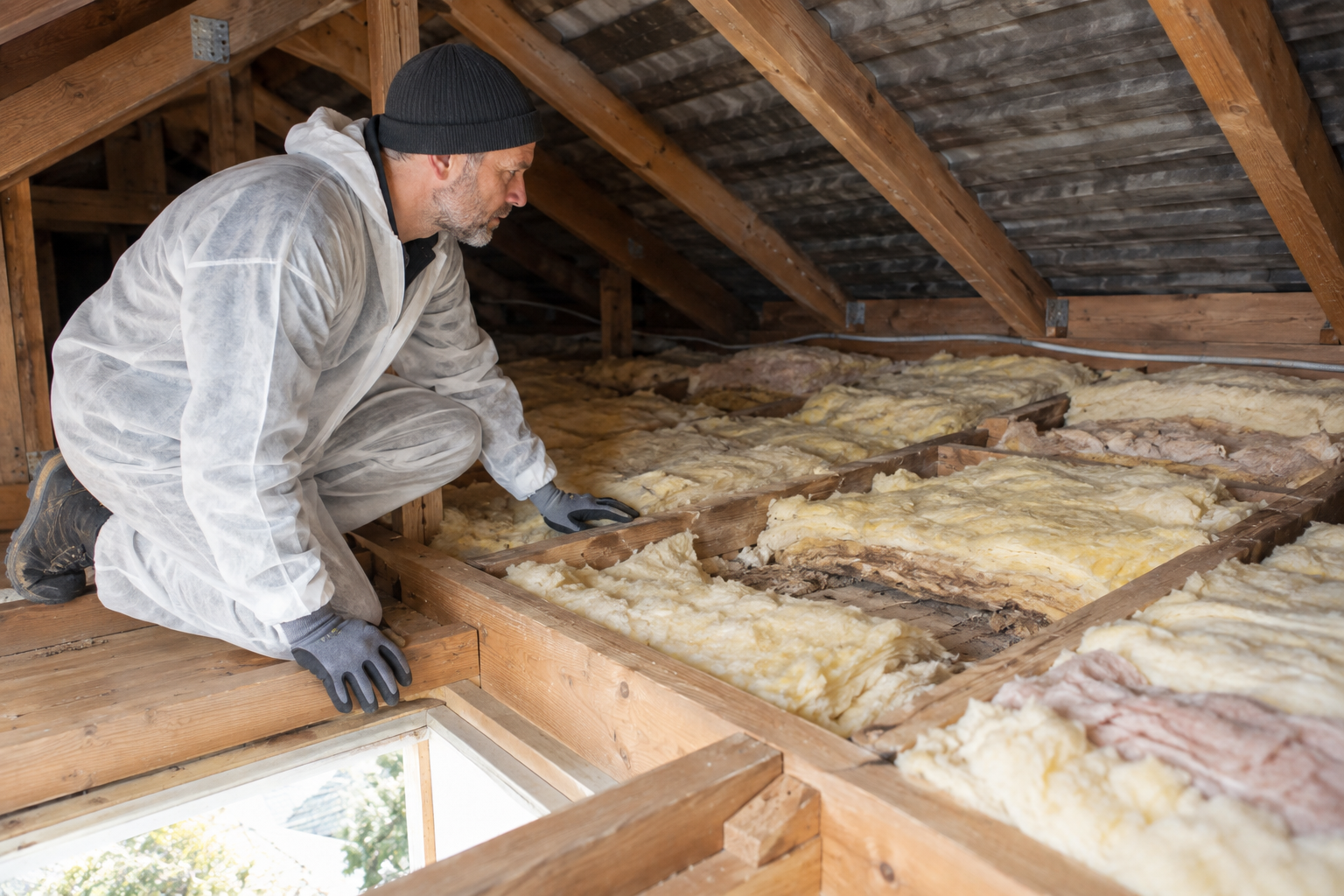
How to tell whether your existing insulation needs replacing
Insulation does not need replacing just because it is old. What matters is whether it still covers the intended area, stays dry, remains in reasonable condition and is suitable for the performance you want. We often find that targeted repairs or a carefully specified top-up are more sensible than removing every existing piece.
Visible signs worth investigating
- Missing coverage: bare ceiling sections, empty bays between floor joists or gaps around edges and service penetrations leave easy paths for heat flow.
- Displacement or sagging: ceiling material moved by storage or trades, and underfloor segments that have dropped away, no longer form a consistent layer.
- Compression: squashed bulk insulation cannot be assumed to provide its labelled performance. This often happens beneath stored items or when a thicker product is forced into a space.
- Dampness, staining or mould: investigate roof leaks, plumbing, drainage and condensation before deciding what to replace.
- Physical damage: torn material, pest disturbance or deterioration can leave the insulation uneven or contaminated.
A cold patch or high heating bill is a reason to inspect, not proof that the insulation itself has failed. Draughts, glazing, heating and ventilation can also affect comfort.
Look at the whole layer, not one convenient corner
From a safe access point, you may be able to photograph the ceiling near the hatch. That view rarely shows the harder areas at the eaves, around recessed fittings or behind roof framing. Under a suspended floor, one good-looking bay does not prove the rest is covered. An installer checks continuity across the accessible area, fixings, edges, moisture and any conditions that limit safe work.
Do not walk across ceiling linings or touch wiring. Older houses may contain hazardous materials. In particular, existing foil underfloor insulation can create an electrical shock risk if damaged wiring contacts it; leave uncertain material to a suitably qualified professional. Fire clearances at downlights and other fittings also need proper assessment.
Repair, top up or replace?
| Finding | Possible response |
|---|---|
| Small gaps, otherwise dry and sound | Refit or add compatible insulation to restore continuous coverage. |
| Reasonable existing ceiling layer but insufficient performance | Assess whether a compatible top-up can be fitted safely without compressing the first layer. |
| Wet, contaminated or badly damaged areas | Fix the source, assess affected building materials, then remove and replace what is unsuitable. |
| Underfloor sections fallen away or poor fixings | Check the system and attachment method; replace or refit as the condition warrants. |
The decision is site specific. Product labels, installation records and a council file may help identify the original R-value, but the actual coverage and condition still need checking. A professional inspection should say what can stay, what needs repair and where replacement is justified.
When to book an inspection
Arrange one when you buy an older home, notice a new leak or persistent damp smell, see material hanging below the floor, plan electrical or roof work, or have rooms that remain uncomfortable after obvious draught and heating issues are addressed. For rental homes, check the current Healthy Homes insulation standard as well: it has specific requirements for ceiling and underfloor insulation and for the condition of existing material.
Ask for a clear record of observed gaps, moisture, access limits and proposed products. Our team can inspect accessible areas and recommend a focused retrofit scope. Contact SInsulation through our enquiry page and tell us which rooms are cold and whether you have noticed any leaks.